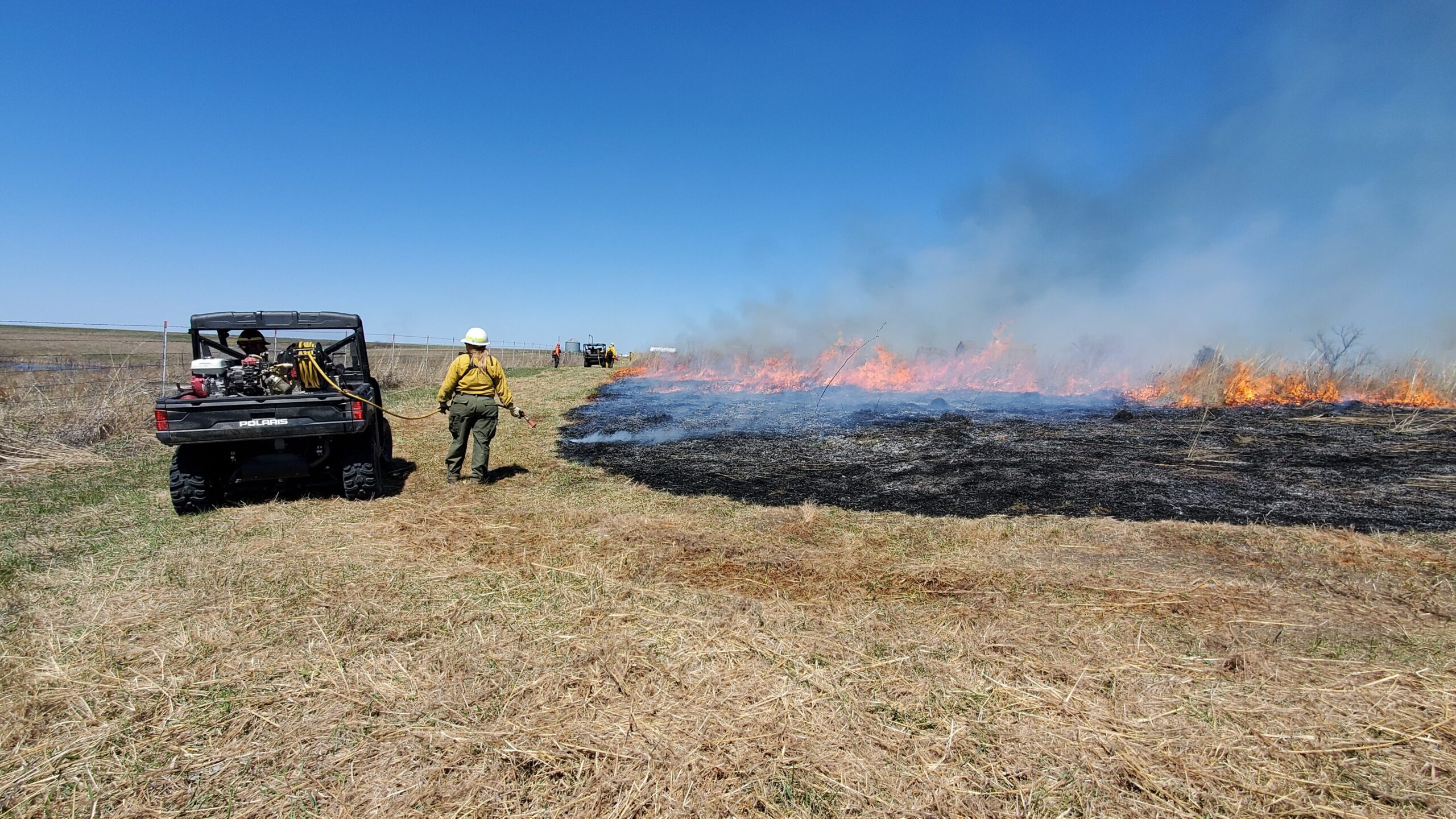
“There are few substitutes for the experience gained by experiencing a live fire. Observation of live fire has long been recognized as a critical factor in understanding fire behavior and the challenges it poses to fire management.” McGranahan et al., 2022
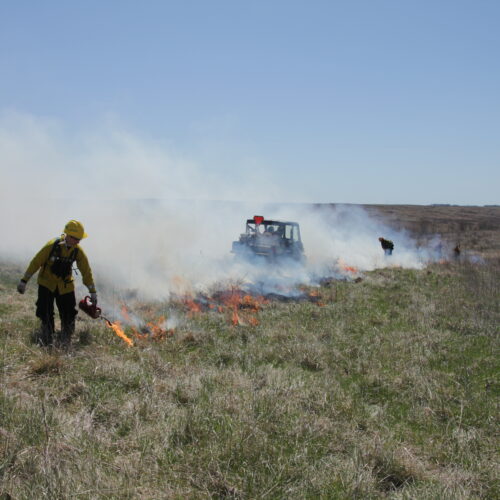
Since 2022, representatives of the Tallgrass Prairie and Oak Savanna Fire Science Consortium, University of Florida, The Nature Conservancy Missouri Field Office, and the United States Fish and Wildlife Service have come together at The Nature Conservancy’s Dunn Ranch Prairie in northern Missouri each spring to conduct a Hands-On Fire Science Methods workshop.
The objective is to create an immersive experience where early-career natural resources professionals and researchers gain hands-on training and experience in collecting data necessary to interpret prescribed fire outcomes. To achieve that, the workshop emphasizes two distinct arenas: best practices for conducting robust wildland fire science, including collecting data on fuels, fire weather, and fire behavior; and strategies and tactics for conducting prescribed fire.
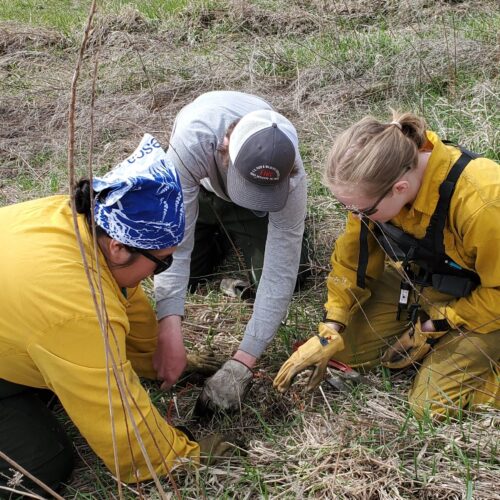
Workshop participants are introduced to tools and protocols for measuring essential weather parameters, fuel characteristics, and fire behavior. Participants learn to monitor fire weather with the standard belt weather kit and record information for a burn with digital fire weather loggers. Fuels are discussed in terms of size class and live vs. dead portions, and participants are taught both destructive and rapid, non-destructive methods. Finally, participants learn techniques to measure flame temperature, soil heating, and rate of spread using thermocouples and dataloggers.
Importantly, the Workshop emphasizes understanding how each component of the wildland fire environment shapes fire effects and relates to both research and management objectives. The goal is for participants to gain familiarity with the fire environment and what measurements might be most effective for their own planning, research, or management program. Furthermore, participants develop their capacity to critically assess fire effects in terms of the fire environment when the burn occurred. To enable students to see the connections between fire applications, fire behavior and outcomes, students integrate with the local fire crew and engage in fireline operations. The workshop begins with familiarization with fireline equipment operations including pumps and torches, and basic operational procedures. Planning burns to achieve objectives
Each day of the workshop is divided into time for fire science or fire operations – sometimes both.
Student comments indicate the workshop is a successful and a solid platform.
Requirements:
- Basic NWCG firefighter suite. Can be completed online prior to arrival.
- Ability to complete the NWCG work capacity test at least moderate (offered on-site the day before the workshop begins)
Application period usually opens in January.
Workshop is held in late March or early April depending on holidays, instructor schedules and site availability. 2027 dates are April 4-9.
Students and instructors live together in TNC housing on-site.
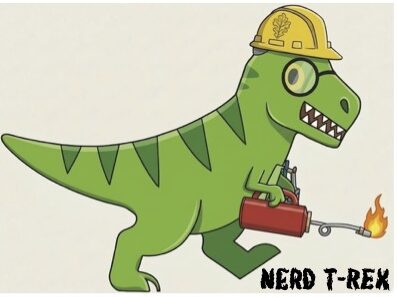
As a nod to the Prescribed Fire Training Exchange program (TREX), which focuses on gaining operational experience and qualifications, the fire science workshop is affectionately nicknamed NerdTREX. Our mascot is the “Nerd T-Rex” (pictured…).